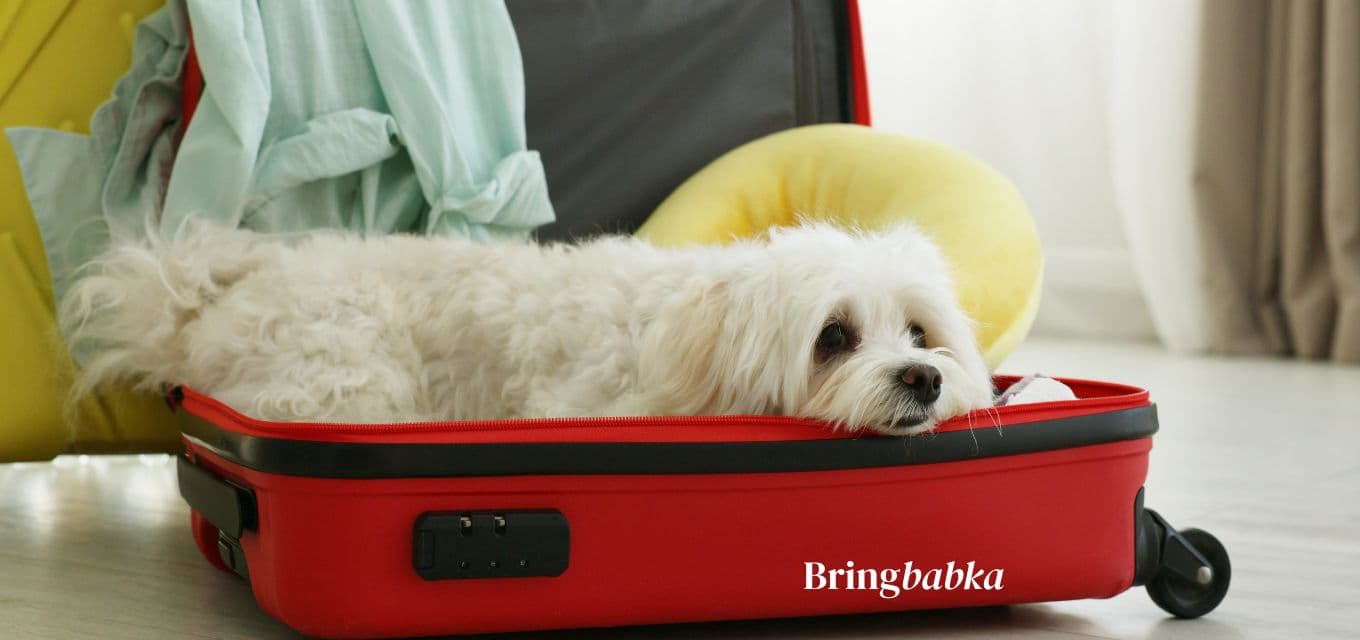
When the transport company collects your pet, what actually needs to go with them? It's a practical question that's easy to overlook in the paperwork fog - and the answer depends on where your pet is flying from.
The consistent advice from experienced pet owners and agents: keep it simple. But what simple looks like varies by route.
Food - it depends on your route
If your pet is flying from the UK or Canada, food needs to travel with them. These journeys involve long transits - 24 hours or more via Dubai, Doha, or Singapore - and your pet will need to be fed during layovers at the transit facility. Pack enough dry food to cover the full transit period plus a buffer: typically 2-3 meals. Seal it in a bag labelled with your pet's name, feeding instructions, and portion sizes.
If your pet is flying from the US via QANTAS from LAX, the journey is shorter and food is generally not required. QANTAS Freight handles this as a more direct cargo service and the transit time doesn't require mid-journey feeding. Check with your agent to confirm, but don't assume the same rules apply as for the longer UK and Canadian routes.
Any food that arrives in Australia with your pet will be confiscated and destroyed. Biosecurity rules prohibit imported food from entering the country. Don't pack more than the journey requires.
Collar and lead
Send both. Your pet travels in their crate for the flight itself - they won't be wearing the collar in the air - but the collar and lead are attached to the outside of the crate and travel with them. They'll be needed at Mickleham when your pet is collected after quarantine.
What not to send
Do not put anything in the crate. The DAFF guide explicitly states that toys, blankets, medication, and any other items will be destroyed as biosecurity waste on arrival in Australia. Nothing goes in the crate except your pet.