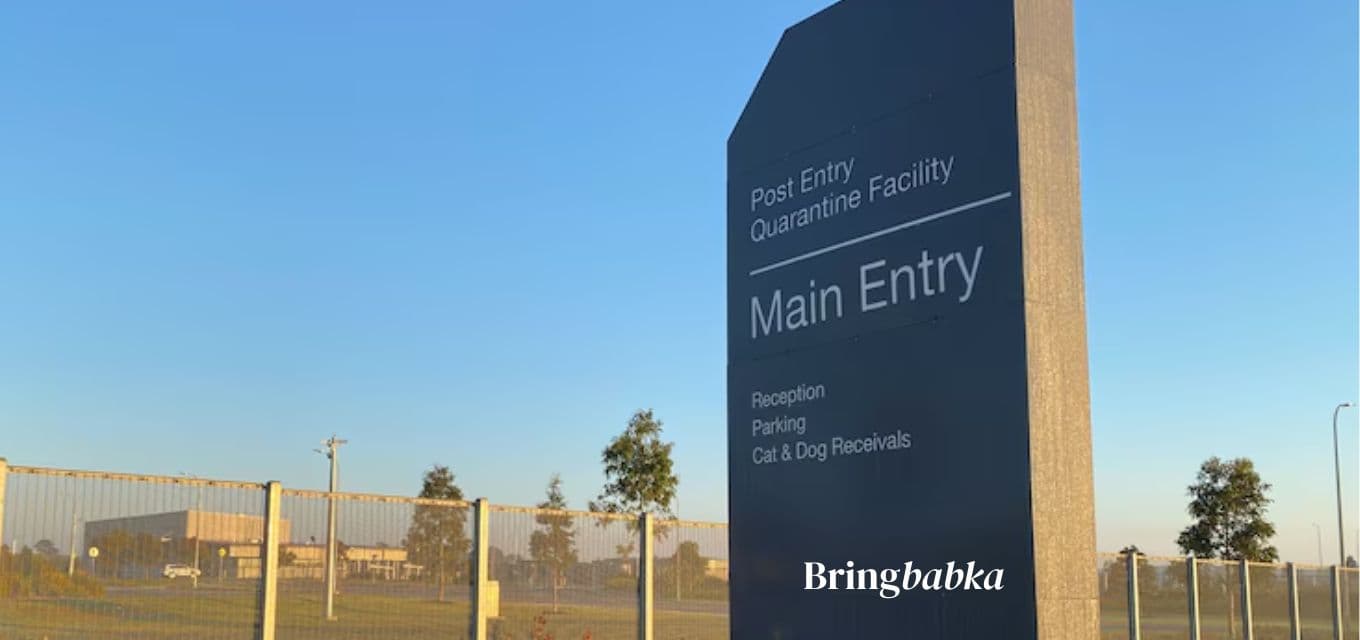
If you're moving a pet from the US to Australia, your dog or cat will spend time at the Mickleham Post Entry Quarantine Facility. This is not optional - every pet entering Australia from the US must complete a quarantine period. This guide covers what Mickleham is, what happens there, how much it costs, and what to expect when you collect your pet.
What and where is Mickleham?
The Mickleham Post Entry Quarantine Facility is Australia's purpose-built animal quarantine centre, located approximately 35 kilometres north of Melbourne's CBD and close to Melbourne Airport (Tullamarine). It is operated by the Australian Department of Agriculture, Fisheries and Forestry (DAFF) and is the only facility in Australia that accepts imported dogs and cats.
This is why all pets enter Australia through Melbourne, regardless of your final destination. Even if you're moving to Sydney, Brisbane, Perth, or anywhere else in Australia, your pet flies into Melbourne, completes quarantine at Mickleham, and then either travels with you to your destination or is shipped domestically afterward.
The facility was purpose-built for animal quarantine. It is modern, climate-controlled, and staffed by trained animal handlers and veterinary professionals. It is not a boarding kennel - it is a biosecurity facility. The standards are high, but the environment is institutional, not homely.
How long does quarantine last?
Quarantine duration depends on whether your pet's identity verification was completed correctly before the RNATT blood draw:
| Scenario | Duration |
|---|---|
| Identity verification completed before blood draw | 10 days |
| Identity verification not completed or done after blood draw | 30 days |
There is no way to reduce the duration once it's been assigned. The determination is made based on your documentation before your pet arrives. For a detailed explanation of how this works, read the 10-day vs 30-day quarantine guide.
What happens on arrival?
When your pet's QANTAS Freight flight lands at Melbourne Airport, the process moves quickly:
- Customs clearance. Your pet's paperwork is checked by DAFF biosecurity officers at the airport.
- Transfer to Mickleham. Your pet is transported from the airport to the facility. This usually happens within a few hours of landing.
- Intake examination. A veterinarian at Mickleham examines your pet on arrival, checks the microchip, and reviews the health documentation.
- Assignment to housing. Your pet is placed in their individual kennel (dogs) or cattery unit (cats) for the duration of quarantine.
You will receive a notification from the facility confirming your pet has arrived and been admitted. This typically comes within 24 hours of arrival.
Daily life at Mickleham
Mickleham is a quarantine facility, not a boarding service. The routine is designed around biosecurity and animal welfare:
You cannot visit your pet during quarantine. Mickleham is a strict biosecurity facility. No owner visits are permitted at any point during the quarantine period.
- Feeding. Pets are fed a standard diet provided by the facility. If your pet has specific dietary requirements or allergies, you can notify the facility in advance and they will accommodate where possible. You can also arrange to send specific food.
- Exercise. Dogs receive daily exercise time in individual outdoor runs. The amount of time varies but all dogs get daily time outside their kennel.
- Health monitoring. Veterinary staff monitor all animals daily. Any health concerns are reported to the owner promptly.
- Accommodation. Dogs are housed in individual kennels with indoor and outdoor areas. Cats are housed in individual cattery units. The facility is climate-controlled.
- Communication. The facility will contact you if there are any health concerns. Routine updates are not typically provided - no news is good news.
Your pet will be comfortable. They will not be happy in the way they are at home, but the staff are experienced and the facility is well-maintained. Thousands of pets complete quarantine at Mickleham every year without incident.
Costs
Quarantine fees are paid directly to DAFF and are separate from all other costs in the import process. Fees are charged in Australian dollars:
| Item | Approximate cost (AUD) |
|---|---|
| 10-day quarantine (dog) | ~$3,000 |
| 30-day quarantine (dog) | ~$4,100 |
| 10-day quarantine (cat) | ~$2,800 |
| 30-day quarantine (cat) | ~$3,800 |
These fees cover housing, feeding, veterinary oversight, and biosecurity processing. The exact amount depends on the current fee schedule published by DAFF, which is updated periodically. Payment is required before your pet is released.
Additional costs may apply if your pet requires veterinary treatment during quarantine. Routine health checks are included; treatment for illness or injury is billed separately.
For a complete breakdown of all costs involved in moving a pet from the US to Australia, see the full cost guide.
Collecting your pet
Collection day is the best day in the whole process. Here's what to know:
- Collection times. Mickleham has specific collection windows. You will be notified of the exact date and time range your pet will be available for pick-up. Collections generally happen in the morning.
- What to bring. Bring your ID, your import permit reference number, and a suitable leash and collar for dogs (or carrier for cats). You'll also need a way to get your pet home - have a car ready, or arrange pet-friendly transport.
- Payment. All quarantine fees must be paid before collection. Confirm payment has been processed in advance to avoid delays on the day.
- Your pet's condition. Expect your pet to be healthy but possibly a bit thinner or more anxious than usual. Quarantine is not traumatic for most animals, but it is a change of environment. Most pets bounce back to normal within a few days of being home.
- If you're not in Melbourne. You can arrange for someone else to collect your pet with appropriate authorisation, or arrange domestic transport to your city. Many pet transport companies offer domestic transfers from Mickleham.
How to prepare your pet
There are a few things you can do before departure to help your pet's quarantine go more smoothly:
- Crate training. Your pet will spend time in a crate during the flight and in a kennel during quarantine. Crate-trained pets generally handle both much better. Start crate training well in advance.
- Dietary information. Notify the facility of any dietary requirements or allergies. Provide this information when you book quarantine or shortly after.
- Comfort items. You can include a familiar blanket or toy in the travel crate. The facility may or may not keep this with your pet depending on biosecurity protocols, but it doesn't hurt to include it.
- Medication. If your pet takes regular medication, notify the facility in advance with full details - drug name, dosage, frequency, and reason. Provide the medication with the pet and include it in the health certificate documentation.
What if something goes wrong?
Problems during quarantine are rare but do happen. The most common issues:
- Illness. If your pet becomes ill during quarantine, the facility's veterinary staff will treat them. You will be notified and treatment costs may apply. In serious cases, the vet will contact you to discuss options.
- Extended quarantine. If health testing during quarantine reveals a concern, the quarantine period may be extended. This is uncommon for pets from the US.
- Mortality. This is extremely rare. The facility is staffed 24/7 and animals are monitored daily. In the unlikely event of a serious health issue, the facility contacts the owner immediately.
The vast majority of pets complete quarantine without any issues. The staff at Mickleham do this every day and are experienced in caring for animals that have just completed a long international journey.
Frequently asked questions
No. Mickleham is a biosecurity facility and does not allow owner visits during the quarantine period. You will be notified when your pet arrives and contacted if any health concerns arise. Otherwise, no news is good news.
You can arrange to send specific food if your pet has dietary requirements. Contact the facility after your pet is admitted to discuss this. Standard quarantine procedure uses facility-provided food, but accommodations can be made for medical diets and allergies.
The facility has veterinary staff on site. Your pet will be examined and treated. You will be notified of any health concerns. Treatment costs beyond routine health monitoring are billed to the owner. In serious cases, the vet will contact you directly to discuss treatment options.
Yes. If you are not in Melbourne, you can authorise someone else to collect your pet on your behalf. You'll need to provide the facility with written authorisation and the collector's identification details in advance. You can also arrange domestic pet transport from Mickleham to your location in Australia.
Yes, for dogs and cats. The Mickleham Post Entry Quarantine Facility is the only facility in Australia that accepts imported dogs and cats. All pets must enter through Melbourne regardless of your final destination in Australia.